Taboo for ESL Teachers: Speaking Cards by CEFR Level
Taboo is a paraphrase drill disguised as a party game: students must explain a word without its obvious synonyms. Below are free speaking-card decks by CEFR level and school subject, a classroom version of the rules, a 30-minute lesson plan and ways to run it on Wordwall, a projector or Zoom.
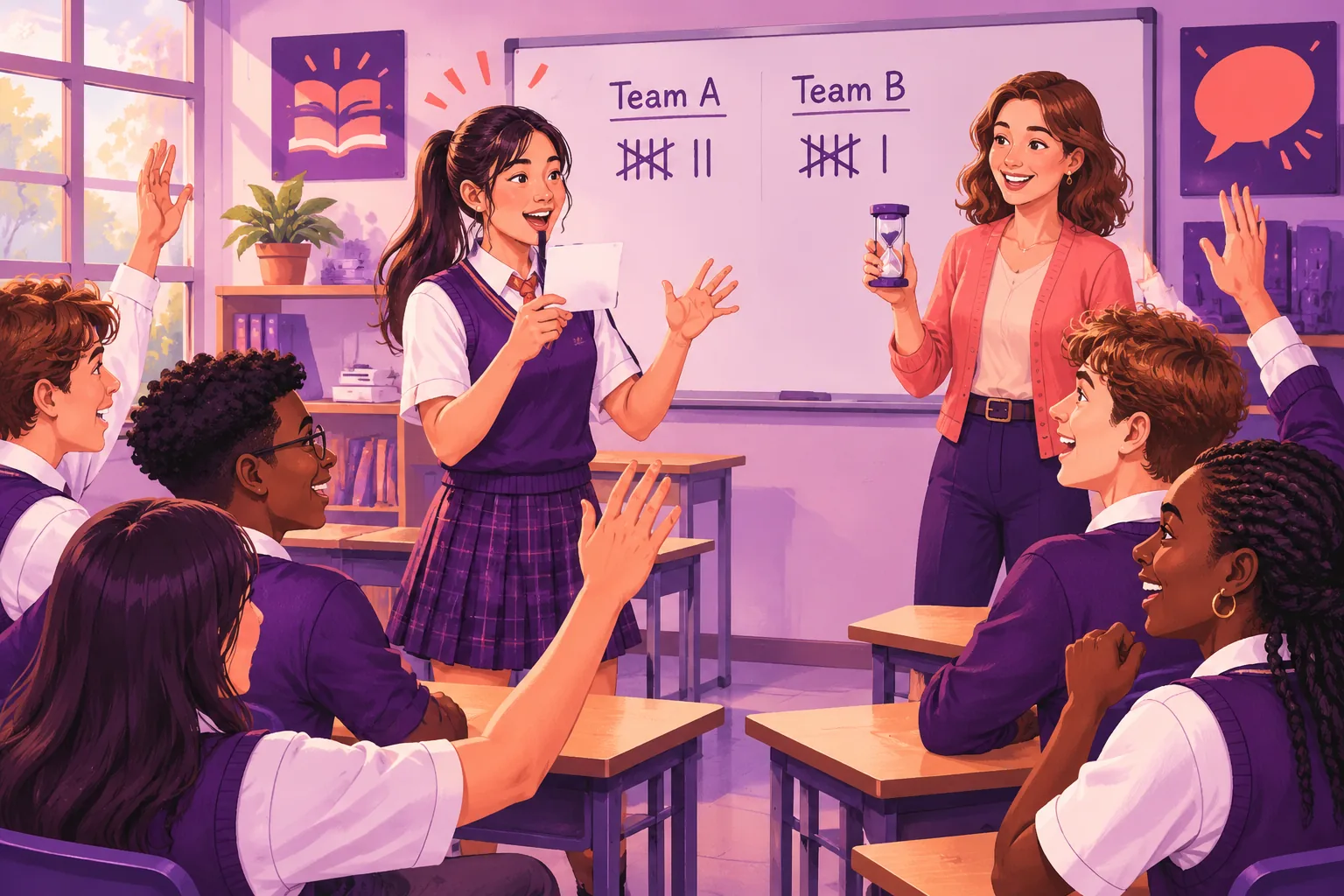
Speaking cards by CEFR level
| Level | Deck | What students practise |
|---|---|---|
| A1 | A1 beginner cards | Concrete nouns: what it looks like, where you find it |
| A2 | A2 everyday situations | Describing a situation: “You are at… and you need…” |
| A2–B1 | Places in the city | Buildings, services and directions |
| B1–B2 | Jobs and professions | Routines and responsibilities |
| B1–B2 | Friendship and social skills | Feelings and relationships |
| B2 | B2 abstract and exam words | Paraphrasing abstract nouns and verbs |
| C1 | Advanced and abstract | Ideas with almost no synonyms |
Subject and ELA decks
For content classes, the math deck covers fractions, geometry, algebra and probability, and the anatomy deck covers bones, body planes and organs. ELA teachers can use the advanced deck for literary terms such as irony and metaphor, or write their own with the card maker.
Classroom rules (adapted from the box)
| Rule | Box rule | Classroom variant |
|---|---|---|
| Taboo words per card | 5 | 3–5 (cover the last ones for A1–A2) |
| Turn length | 60 seconds | 60–120 seconds by level |
| Gestures | Not allowed | Allowed for A1 and young learners |
| Who buzzes | A player from the other team | The teacher, or a student judge |
| Passing | Card goes to the other team | Free pass, maximum two per turn |
A 30-minute Taboo lesson plan
- Warm-up (5 min): show one card and model a clue out loud, including one mistake that gets “buzzed”.
- Language focus (5 min): board useful frames: “It’s a kind of…”, “You use it when…”, “It’s the opposite of…”.
- Pair practice (5 min): pairs describe four cards to each other without a timer.
- Team game (12 min): two teams, the generator on the projector, hot-seat style.
- Wrap-up (3 min): each student writes one new frame they heard and one word they could not explain.
If the class has never played, show this short rules video before the warm-up.
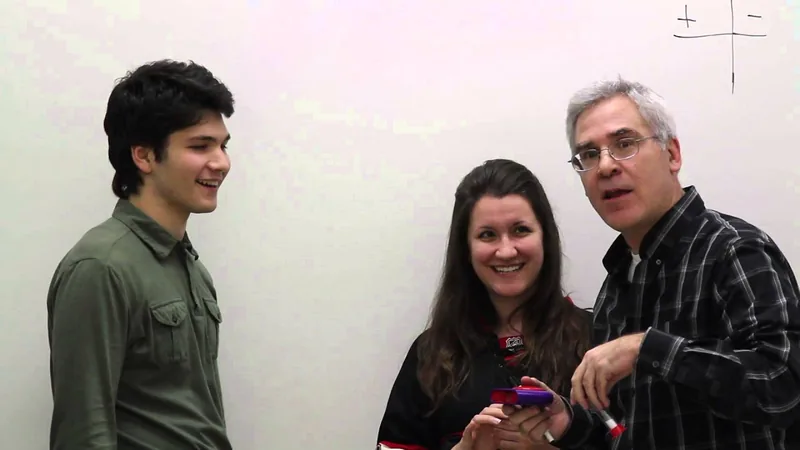
Glenn Olson · uploaded 2014-12-17 · 2:45
Wordwall, projector and online classes
Wordwall’s speaking-cards activity is the usual digital format; its public Taboo templates, such as “Taboo: places in the city”, show three or four taboo words per card. Paste our cards into a speaking-cards template, or skip the setup and project the word generator instead.
For online lessons, keep the generator in your own window, share only the timer, and send the card to the student who is describing in a private chat. More set-ups are on Play Taboo online.

Frequently asked questions
Is Taboo good for ESL speaking practice?
Which level should I start with?
Can I use these cards on Wordwall?
Is it OK to let students use gestures?
Keep going
 A1 Beginner Word CardsA1 · 8+ / beginner learnersA2 Everyday Places & SituationsA2 · 11+ / elementary learnersB2 Abstract & Exam WordsB2 · 16+ / upper-intermediate
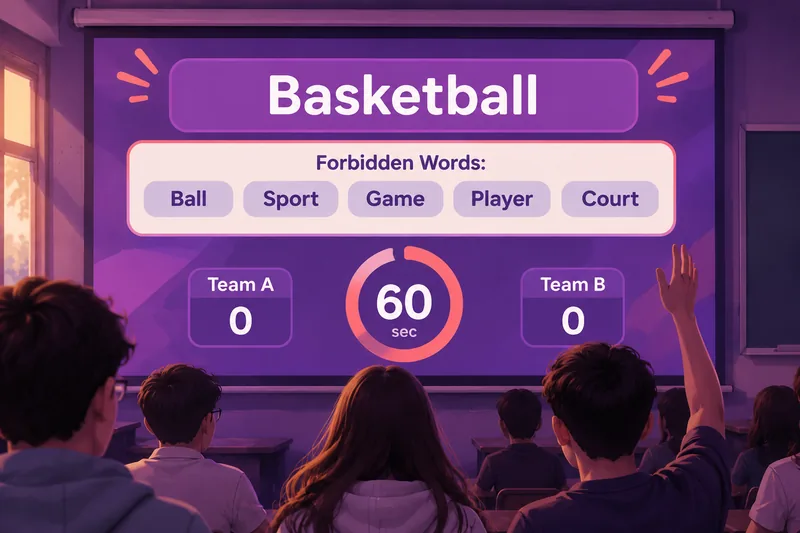 Word generatorRandom card, timer and score on one screen.
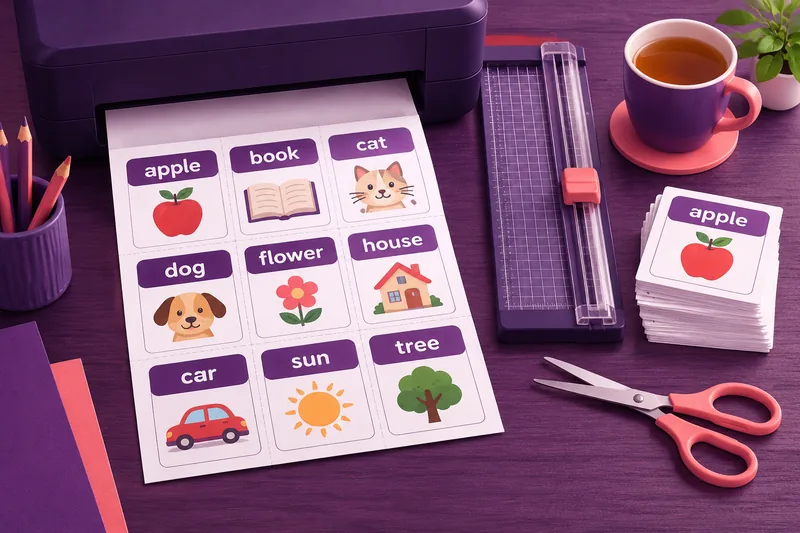 Printable Taboo cardsFree PDFs in A4 and Letter with cut lines.
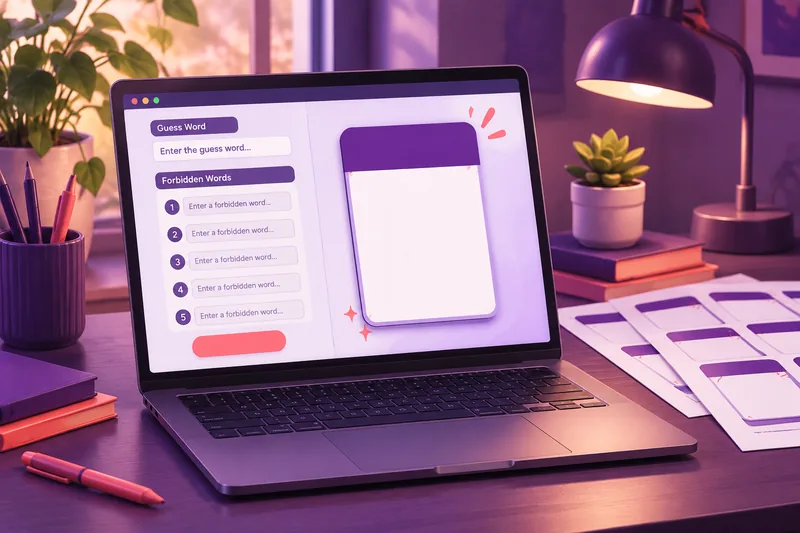 Card makerType your own cards and print them.
Sources
- Hasbro Taboo rules PDF (1999/2000 printing) — turn order, scoring, fouls and tie-break
- Cambridge English: A2 Key vocabulary list — topic lists used to grade the A2, places and jobs decks
- Fawn Nguyen: Math Taboo Game — classroom variant with four taboo words
- Wordwall: Taboo, places in the city — teacher template with three to four taboo words
- OpenStax Anatomy & Physiology 2e: Anatomical Terminology — directional terms and body planes
Sources read on 28 Nov 2026. A fact counts as checked when two independent sources agree; where they disagree, both readings stay on the page. How we work: editorial policy.
Limitation: we know of no study measuring vocabulary gains from Taboo, so this page makes no claims about learning outcomes.
Last updated: · Taboo Game Guide editors